What Korean Food to Bring to Thanksgiving (Easy, Mostly Store-Bought Options)
Four Korean dishes you can buy at a Korean grocery store and bring to Thanksgiving, plus how to transport, reheat, and label them for guests with allergies.
Published
Thanksgiving falls on Thursday, November 26, in 2026. If you’ve been invited to a Thanksgiving dinner and want to bring something Korean, or you’re hosting Korean friends and want something familiar on the table, a Korean grocery store makes it easy. You don’t need to cook from scratch.
The short version:
- Good first pick: ready-made japchae, the stir-fried glass noodle dish.
- Easy hot appetizer: frozen mandu (dumplings), cooked at home following the package.
- No cooking at all: a small container of kimchi, or baek-kimchi (white kimchi) for guests who avoid spicy food.
- A different dessert: ready-to-eat tteok (Korean rice cakes).
- Tell your host first, and bring a card that lists the main ingredients and allergens.
Before you shop: ask the host
A quick text to your host helps avoid surprises.
- Ask what’s missing. A side dish or appetizer usually fits better than a second main course.
- Ask about allergies and diets. Several of these dishes can contain wheat, soy, sesame, eggs, tree nuts, fish, shellfish, or meat.
- Ask about oven and stovetop space. On Thanksgiving Day the oven is often full. Food that is served cold or reheats in a microwave is easier on the host.
1. Japchae (잡채): stir-fried glass noodles
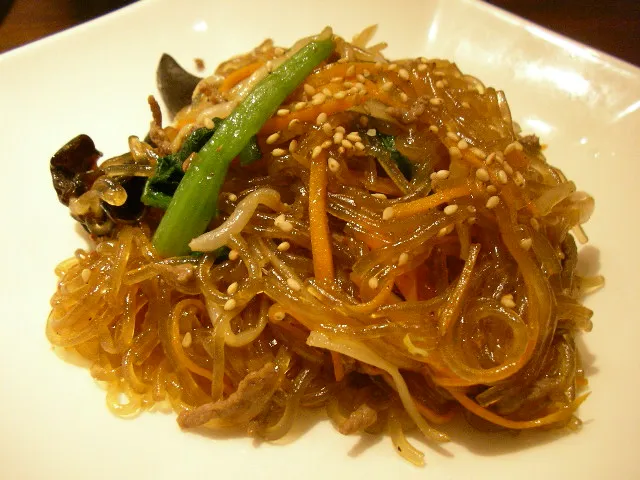

Japchae is a dish of chewy glass noodles stir-fried with vegetables and a soy-based seasoning, often with beef or mushrooms. Its mild, savory-sweet flavor can make it an approachable choice for guests new to Korean food.
- Where to find it: look for ready-made japchae in the prepared-food or banchan (side dish) section. Some stores also sell kits with noodles and sauce. Availability varies by store.
- Allergens to check: the label may list soy, wheat (many soy sauces contain wheat), and sesame. Some versions include beef or other meat.
- Serving tip: japchae is often eaten warm or at room temperature, but it is still a cooked, perishable dish. Keep it at 40°F or below during the trip. If you reheat it, heat it to 165°F, and don’t leave it out for more than two hours.
2. Mandu (만두): frozen dumplings
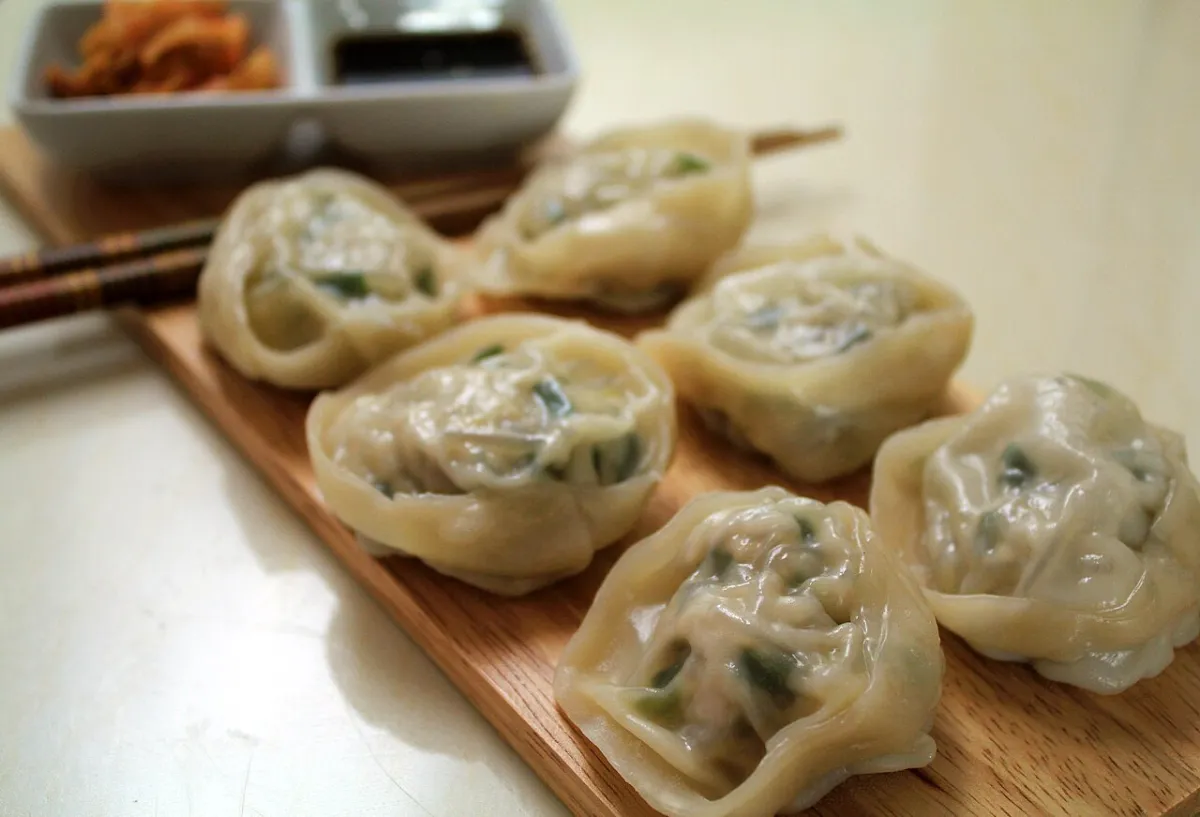

Korean frozen dumplings come filled with pork, beef, chicken, kimchi, vegetables, or a mix. Cooking methods vary by product: some are made for the pan, others only for the microwave or steamer.
- Follow the package directions. They are written for that product’s size and filling, and some products say not to use certain methods.
- Allergens to check: many wrappers are made with wheat flour. Fillings may include pork, shrimp, soy, egg, or sesame. Read the full label.
- Bring a dipping sauce separately in a small container so guests can choose.
- Timing tip: if you cook the mandu at home and carry them hot, keep them at 140°F (60°C) or above, for example in an insulated carrier, and check with a food thermometer. Otherwise, keep uncooked mandu at the temperature the package specifies during the trip, and cook them at your host’s home according to the directions.
3. Kimchi or white kimchi (김치, 백김치): no cooking
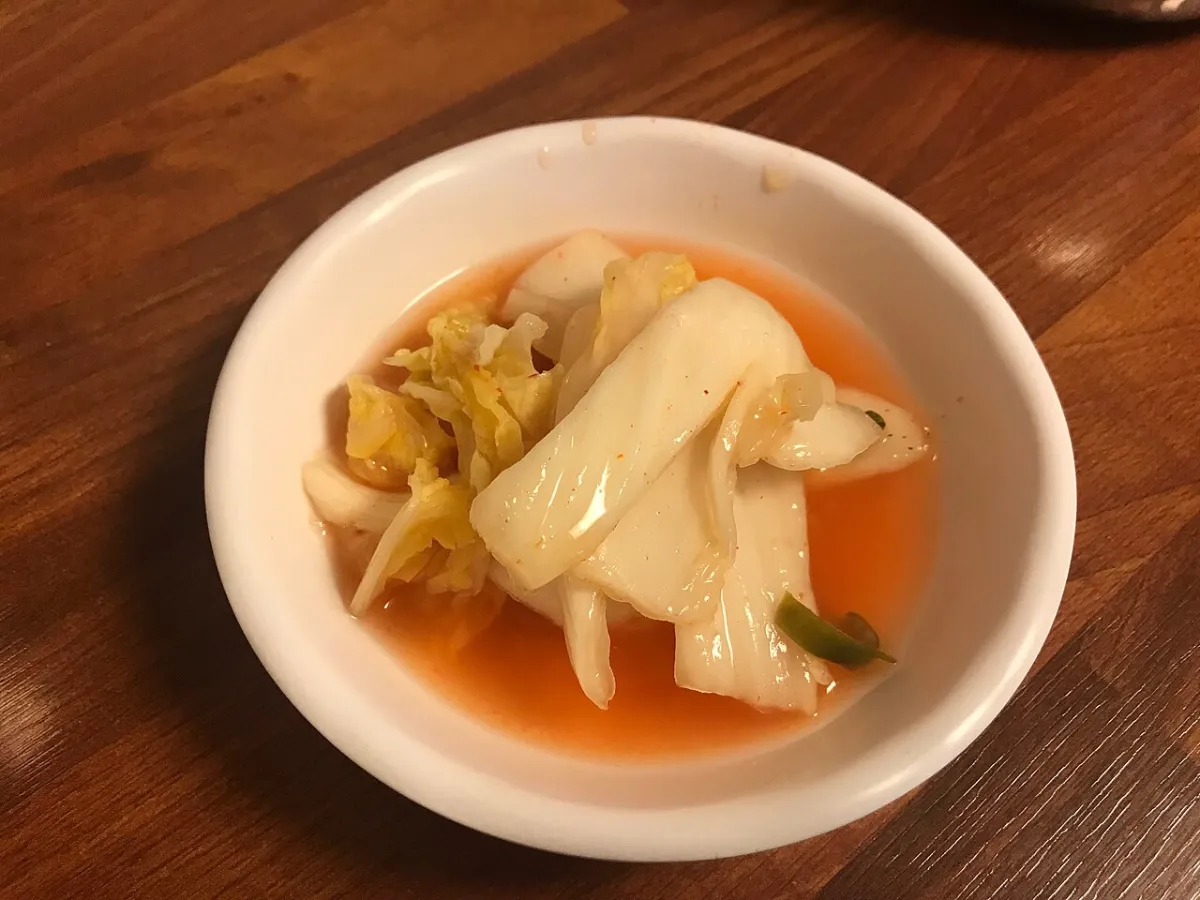

Kimchi adds a sharp, sour, crunchy side to a rich Thanksgiving plate. For mixed groups, consider baek-kimchi, which is usually made without chili flakes.
- Bring a small, sealed container. Kimchi has a strong smell, and a small amount goes a long way.
- Check for fish and shellfish. Many kimchis contain fish sauce, anchovy, or salted shrimp. Fish and crustacean shellfish are major food allergens in the US, according to the FDA. Our kimchi buying guide explains how to read the label.
- Keep it cold until serving.
4. Tteok (떡): Korean rice cakes for dessert
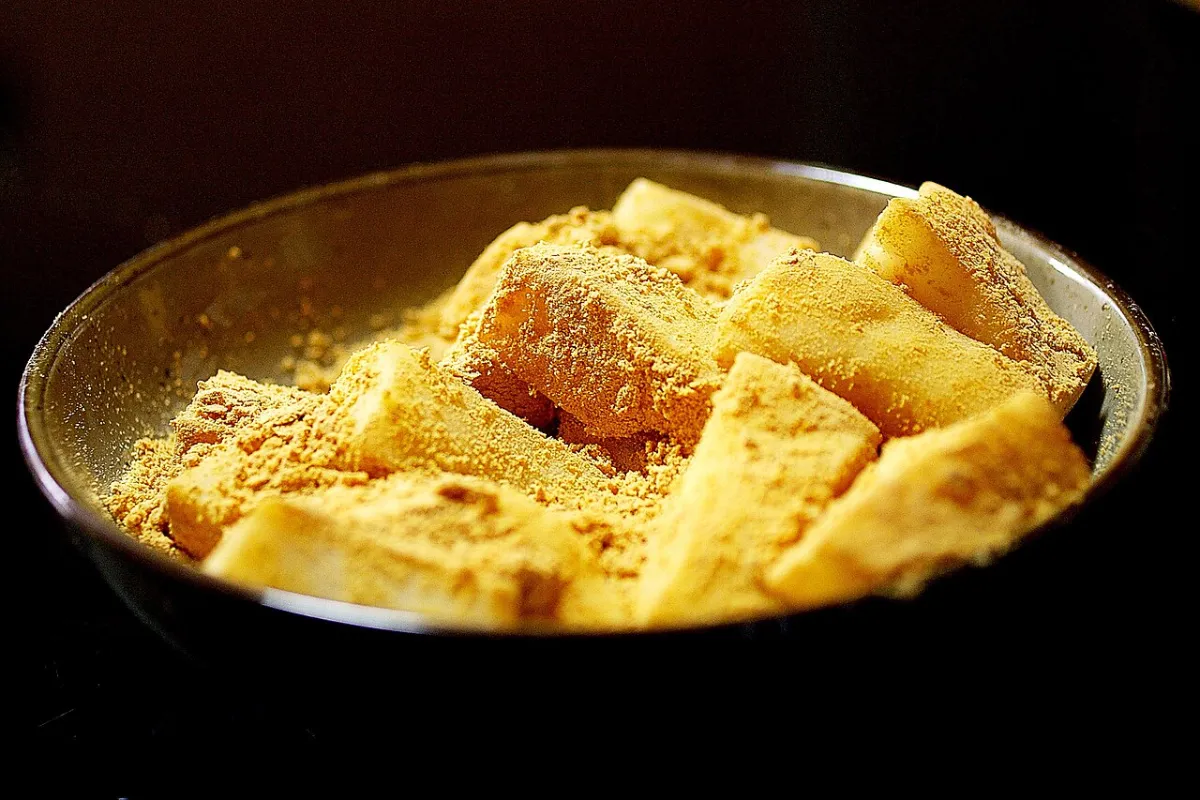

Tteok are chewy cakes made from rice flour, sold in many shapes and flavors, some filled with sweet red bean or coated in powdered soybean or sesame. They make a different dessert option alongside pie.
- Pick ready-to-eat tteok, not the plain rice cakes sold for cooking in soups and stir-fries.
- Buy them close to the day. Fresh rice cakes are best soon after purchase. Follow the storage directions on the package.
- Allergens to check: some include soybean powder, sesame, nuts, or other ingredients. Read the label, and put the allergens on your card.
- Watch for choking. Some chewy, sticky rice cakes can be a choking hazard, especially for young children and people who have trouble swallowing. The CDC advises avoiding small, sticky foods that are hard to chew for young children.
Getting it there safely
Thanksgiving food often sits out for hours. These are the general food safety rules from US agencies:
- Keep cold food cold at 40°F (4°C) or below, the FDA’s guideline for refrigerators. A cooler with ice packs works for the drive.
- Keep hot food hot at 140°F (60°C) or above. Michigan State University Extension describes 40°F to 140°F as the “danger zone,” where bacteria grow quickly. A food thermometer is the only way to know.
- Use the two-hour rule. Don’t leave perishable food at room temperature for more than two hours, or one hour above 90°F, according to the FDA.
- Reheat cooked dishes to 165°F (74°C), measured with a food thermometer, the USDA guideline for reheating leftovers. For frozen products like mandu, follow the package cooking directions.
Make an ingredient card
A small card next to your dish helps guests decide quickly. Include:
- The dish name in English, plus the Korean name if you like
- Main ingredients from the label, such as “pork” or “beef.” Only write “vegetarian” if you have checked every ingredient.
- Allergens from the label, such as wheat, soy, sesame, fish, or shellfish
- Spice level: “not spicy,” “mild,” or “spicy”
If a guest has a serious allergy, choose packaged products with a full ingredient label. Food scooped from a deli counter may not list every ingredient, and it can pick up other foods through cross-contact.
Leftovers
Refrigerate leftovers within two hours. For cooked dishes that have been refrigerated properly, Michigan State University Extension and the USDA say leftovers are safe for 3 to 4 days, and Food Safety News summarizes the USDA advice as finishing Thanksgiving leftovers by the following Monday. Reheat cooked leftovers to 165°F.
Frequently asked questions
Is it okay to bring Korean food to a traditional Thanksgiving? Usually, yes, if you check with your host first. Many hosts welcome a side dish they don’t have to make.
Which dish might appeal to picky eaters or kids? Japchae is usually not spicy, and plain vegetable or meat mandu are familiar to many people. Check allergens either way, and keep chewy rice cakes away from young children.
How much should I bring? Bring enough for a small serving per guest, not a full portion. With a big Thanksgiving spread, most people take a little of everything.
Can I make these from scratch instead? Yes, but this guide is for busy guests. If you cook from scratch, follow a tested recipe and the same food safety rules.
Sources
- FDA: Food Allergies (content current as of Mar. 11, 2026) (checked October 27, 2026)
- FDA: Are You Storing Food Safely? (content current as of Jan. 18, 2023) (checked October 27, 2026)
- Michigan State University Extension: Handling Leftovers Safely, E3260 (Oct. 24, 2022) (checked October 27, 2026)
- CDC: Choking Hazards (infant and toddler nutrition, Mar. 11, 2026) (checked October 27, 2026)
- Food Safety News: Tips for safely enjoying Thanksgiving leftovers, citing USDA (Nov. 27, 2025) (checked October 27, 2026)
Spotted an error? Tell us and we will correct it. See how we write.