How to Choose Kimchi at a Korean Grocery Store in the US
New to buying kimchi? Learn which types to try first, how to spot fish and shrimp allergens on US labels, and how to store it safely.
Published
The kimchi case at a Korean grocery store can be a wall of red jars with labels in two languages. This guide helps you pick one in about five minutes.
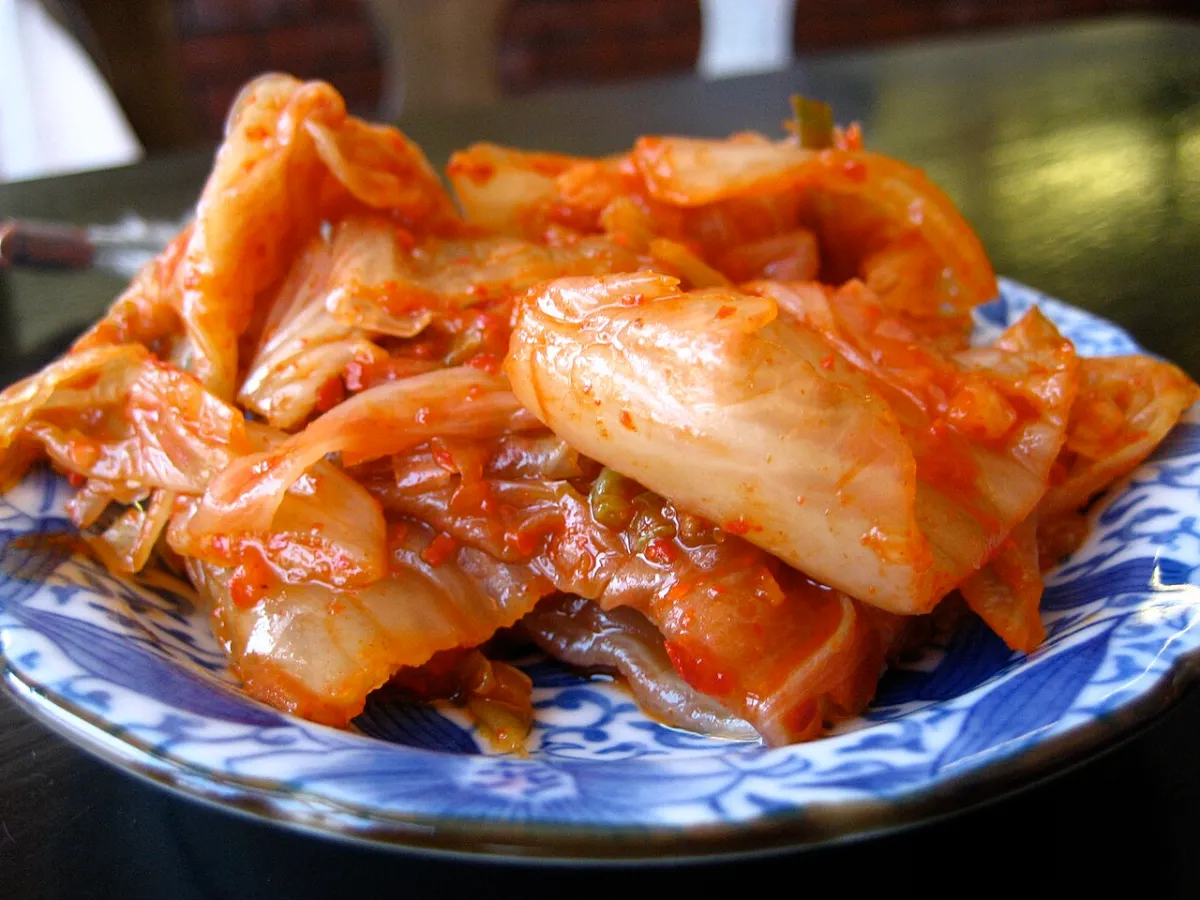

The short version:
- First time? Start with sliced napa cabbage kimchi, kkakdugi (radish cubes), or baek-kimchi (white kimchi, usually not spicy).
- Read the full ingredient list, not just the front. Many kimchis contain fish sauce, anchovy, or salted shrimp. Fish and crustacean shellfish are major food allergens in the US.
- Keep it cold. Store kimchi in the fridge at 40°F (4°C) or below, and follow the storage directions on the label.
- Sour is not the same as spoiled. Traditionally fermented kimchi keeps fermenting in the fridge and gets more sour. Sour kimchi is great for stew. Mold or a slimy texture means it has gone bad.
Which kind of kimchi to buy
“Kimchi” is a whole family of fermented vegetables. These are the ones you are most likely to see.
| Kimchi | Korean | What it is | Good first pick? |
|---|---|---|---|
| Sliced napa cabbage kimchi | 맛김치 (mat-kimchi) | Cabbage cut into bite-size pieces | Yes. Easy to serve. |
| Whole napa cabbage kimchi | 포기김치 (pogi-kimchi) | Cabbage halves or quarters, cut at home | Fine, but you’ll need to cut it |
| Radish cube kimchi | 깍두기 (kkakdugi) | Cubed Korean radish, crunchy | Yes. Classic with soups. |
| Ponytail radish kimchi | 총각김치 (chonggak-kimchi) | Small whole radishes with their greens | Try it second |
| Cucumber kimchi | 오이소박이 (oi-sobagi) | Stuffed cucumbers, fresh and crisp | Yes, but eat it soon |
| White kimchi | 백김치 (baek-kimchi) | Cabbage in a clear, mild brine | Yes, for people who avoid heat |
| Young radish kimchi | 열무김치 (yeolmu-kimchi) | Thin radish stems and leaves | Try it second |
| Green onion kimchi | 파김치 (pa-kimchi) | Whole green onions, strong flavor | Later |
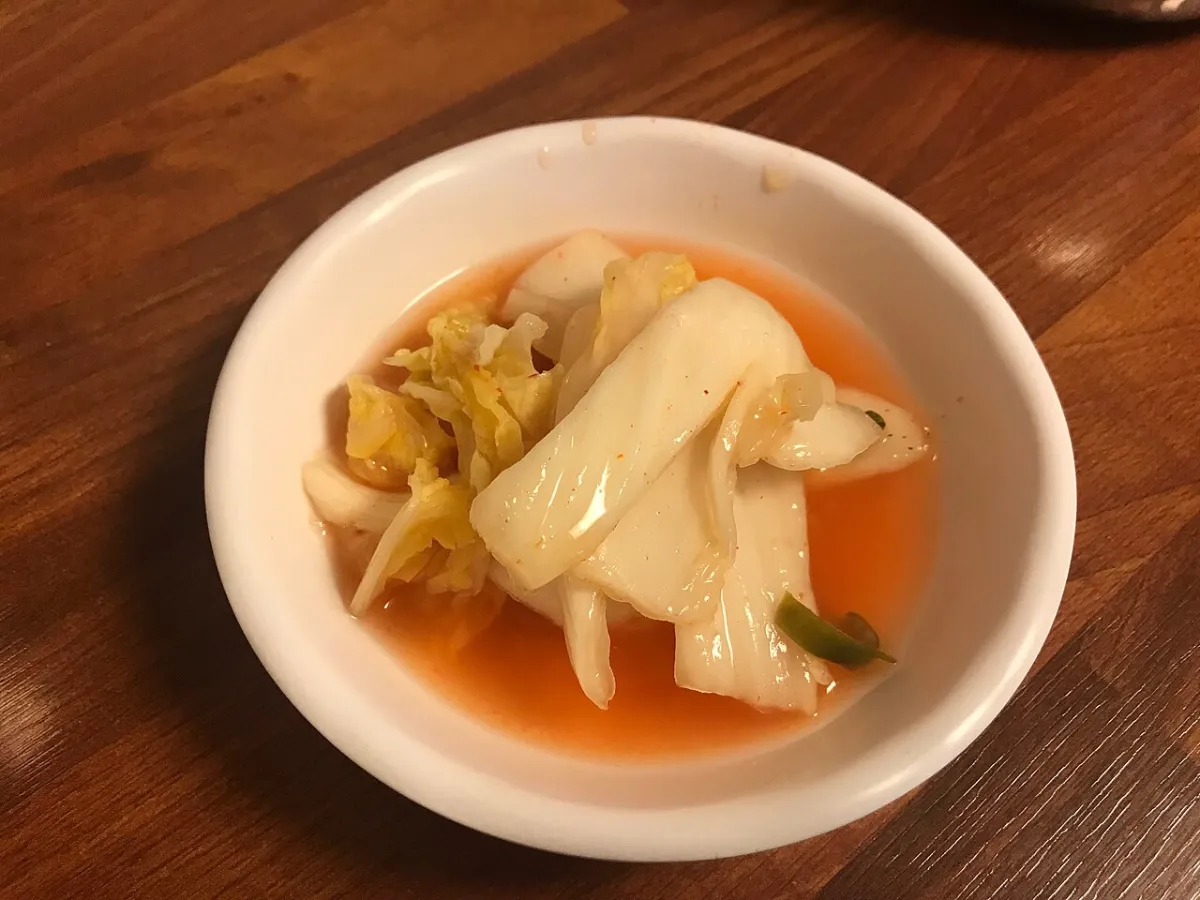

Two notes on that table:
- “Not spicy” depends on the product. White kimchi is usually made without chili flakes, but recipes vary. Check the ingredients if heat is a problem, and don’t assume a mild kimchi is also free of fish or shellfish.
- Cucumber kimchi tends to soften quickly. It is best eaten while it is still crisp.
How to read the label
This is the most important step. Turn the jar around and check these, in this order.
-
Ingredients and allergens. US law names nine major food allergens: milk, eggs, fish, crustacean shellfish, tree nuts, peanuts, wheat, soybeans, and sesame, according to the FDA. In kimchi, look for:
- Fish: fish sauce, anchovy, anchovy sauce
- Crustacean shellfish: shrimp, salted shrimp, shrimp sauce
- Others that sometimes appear: wheat or soy (in some sauces) and sesame
Read the whole ingredient list, not only a “Contains” line. Imported jars often carry an English sticker over Korean packaging, so find the English ingredient and allergen information rather than judging by the front. Even a careful read can’t catch an ingredient the label leaves out. In May 2026, a sliced kimchi sold in the US was recalled because it contained anchovies that were not declared on the label, according to an FDA recall notice. The recall has since been closed. If you have a serious allergy, contact the manufacturer when anything is unclear, and check FDA recall notices.
-
Vegan or vegetarian. These labels are not the same thing. If you avoid all animal products, look for “vegan” specifically, and still check the ingredients for fish, shrimp, and any other animal ingredients.
-
Storage directions. Most kimchi is sold refrigerated and says “Keep refrigerated.” Follow what the label says.
-
Dates. Many jars show a “Best by” or similar date. The USDA recommends “Best if Used By” wording because shoppers understand it as a quality date, not a safety deadline. A date also won’t tell you exactly how sour the kimchi is, because fermentation speed depends on how it was made and stored.
-
Where it was made. “Product of Korea” and “Made in USA” tell you where the kimchi was produced. A “Distributed by” or “Imported by” line identifies the distributor or importer, not necessarily where the product was made.
Fresh or sour?
Traditionally fermented, unpasteurized kimchi keeps fermenting after you buy it, even in the fridge. Oregon State University Extension notes that kimchi “will continue to ferment at a cool temperature,” and that very sour kimchi is often used in soups and stews. Pasteurized products may behave differently, so check the package.
- Fresher kimchi is crunchier and tastes more like salted, seasoned vegetables. It’s the kind most people eat as a side dish.
- More fermented kimchi tastes more sour, and its texture may become less crisp. Many cooks prefer it for kimchi stew (kimchi-jjigae), kimchi fried rice, and kimchi pancakes.
If you can’t tell from the label, buy a small jar first and taste it at home.
Before you leave the store: a quick checklist
- If the label says “Keep refrigerated,” the jar was in a refrigerated case.
- The lid and seal are intact, and the jar isn’t leaking.
- You read the ingredients and allergens.
- The size fits how fast you’ll eat it. Compare the price per ounce, but remember that a larger jar may not be a better value if much of it goes uneaten.
- You can get it into your fridge soon. The FDA’s general rule is not to leave perishable food out for more than two hours, or one hour above 90°F.
Storing kimchi at home
- Refrigerate it at 40°F (4°C) or below, the FDA’s guideline for home refrigerators.
- Use clean utensils each time you take some out.
- Keep it covered and press it down gently to limit air exposure.
- Open the lid slowly over the sink. Fermentation makes gas, and Oregon State University Extension notes that kimchi can overflow its jar while fermenting.
- Know the bad signs. Oregon State University Extension says soft, slimy kimchi is a sign of spoilage. Throw it out if you see mold or if anything about it seems wrong. Normal sourness and a little fizz are not, by themselves, signs of spoilage.
A note on Kimchi Day
November 22 is Kimchi Day. Several US states, including New York and California, have designated it, according to the Korea JoongAng Daily. It is not a federal holiday.
Frequently asked questions
Is there vegan kimchi? Yes. Look for a vegan label and confirm that the ingredients list no fish sauce, anchovy, or shrimp.
Which kimchi is best for kids or people who don’t like spicy food? White kimchi (baek-kimchi) is usually made without chili flakes. Check the ingredients, because recipes vary.
Can I eat kimchi after the best-by date? A best-by date is mainly about quality, not a safety cutoff, but that doesn’t make every past-date jar safe. Consider how it has been stored, whether it has stayed cold, and the package directions. Look and smell can’t confirm that food is safe, but mold, sliminess, or an off smell are reasons to throw it out. When in doubt, throw it out.
Can I freeze kimchi? Freezing slows fermentation, but the vegetables may lose crunch when thawed. Thawed kimchi works best in cooked dishes like stew or fried rice.
Sources
- FDA: Food Allergies (content current as of Mar. 11, 2026) (checked October 27, 2026)
- FDA recall notice: sliced kimchi with undeclared fish (anchovies) (May 4, 2026; recall terminated) (checked October 27, 2026)
- FDA: Are You Storing Food Safely? (content current as of Jan. 18, 2023) (checked October 27, 2026)
- USDA FSIS: USDA Revises Guidance on Date Labeling to Reduce Food Waste (Dec. 14, 2016) (checked October 27, 2026)
- Oregon State University Extension: Is my kimchi safe to eat? (updated Sept. 5, 2023) (checked October 27, 2026)
- Korea JoongAng Daily: Kimchi Day (Dec. 7, 2022) (checked October 27, 2026)
Spotted an error? Tell us and we will correct it. See how we write.