How Korean Names Work: Family Names, Given Names, and English Spellings
Learn why Korean family names come first, why Kim, Lee, and Park are common, why married women keep their surnames, and how to write names in English.
Published
Meet Kim Minjun (김민준). If he fills out an American form, he might write “Minjun Kim.” In Korea, the same name is said and written the other way around: family name first, then given name. That one difference explains a lot of the confusion English speakers run into with Korean names. The rest comes from how few family names there are, how given names are chosen, and how many ways a single name can be spelled in English.
This guide covers names in South Korea.
The short version:
| Part | Example | What to know |
|---|---|---|
| Family name (seong, 성) | Kim (김) | Comes first. Usually one syllable. Kim, Lee, and Park together covered 44.6% of South Koreans in the 2015 census. |
| Given name (ireum, 이름) | Minjun (민준) | Comes second. Usually two syllables, but not always. |
| Full name | Kim Minjun (김민준) | Often reversed to “Minjun Kim” in English. |
| After marriage | No change | Wives keep their own family name. |
| English spelling | Lee, Yi, Rhee | Spellings vary. Follow the person’s established spelling. |
Why does the family name come first?
In Korean, the family name comes first and the given name second. In Kim Minjun, Kim is the family name and Minjun is the full given name. Most Korean names are three syllables, a one-syllable family name followed by a two-syllable given name, according to the Korean Culture and Information Service (KOCIS), part of South Korea’s Ministry of Culture, Sports and Tourism.
When Koreans live, study, or work abroad, many switch to the Western order, which KOCIS notes can confuse even other Koreans. Some Korean Americans also use an English given name, either alone or alongside a Korean one. So “Kim Minjun,” “Minjun Kim,” and “Daniel Kim” could all be the same person.
The order isn’t always obvious from a name written in English. When in doubt, check how the person presents their name, or ask.
Why are Kim, Lee, and Park so common?
South Korea has relatively few common family names. In the 2015 census, Statistics Korea found:
- Kim (김, 金): about 10.69 million people, 21.5% of the population
- Lee (이, 李): 14.7%
- Park (박, 朴): 8.4%
Together that’s 44.6%. The ten most common surnames covered 63.9% of the population. The census did record 5,582 family names in all, but most are rare: 4,075 of them have no Chinese-character (hanja) form, and Statistics Korea said most of those were registered by naturalized citizens.
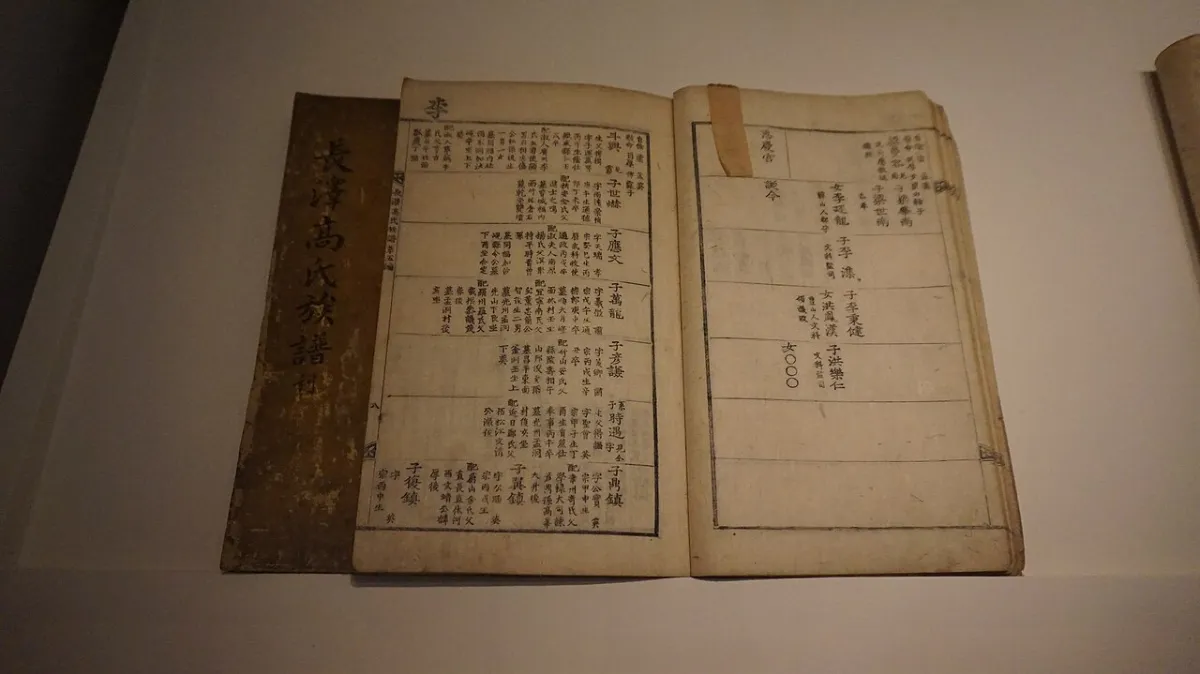
So are all Kims related? Not necessarily. Korean family lines are also identified by a bon-gwan (본관), an ancestral seat: the place a clan’s founder came from or where the clan lived for generations. The Encyclopedia of Korean Culture explains that the bon-gwan came into wide use to tell apart same-surname families with completely separate ancestry. Even two people with the same surname and bon-gwan aren’t necessarily close relatives. In the 2015 census, the largest surname-and-bon-gwan group was the Gimhae Kim clan, with about 4.46 million people (9.0% of the population). Gyeongju Kims, the next-largest Kim clan, numbered about 1.8 million.
You usually won’t hear a bon-gwan in daily conversation. It matters more for family records and clan identity.

A few family names have two syllables, such as Namgung (남궁), Jegal (제갈), and Seonu (선우, often spelled Sunwoo). KOCIS warns against splitting these: someone named Namgung is not “Mr. Nam.”
How are given names chosen?
Most given names have two syllables, though one-syllable and longer names exist too. Traditionally, many given names were chosen using Chinese characters, so the name carries a meaning. But the Korean sound alone doesn’t tell you which characters were chosen, or whether any were, since one syllable can match many characters.
Some names don’t use Chinese characters at all. KOCIS describes a trend since the 1970s toward native Korean names drawn from everyday words, such as Areum (아름, “beauty”), Sarang (사랑, “love”), and Haneul (하늘, “sky”).
Some families also follow a tradition called hangnyeol (항렬), generation order. In families that follow it, relatives of the same generation may share a designated syllable in their given names, called a hangnyeolja (항렬자). The Encyclopedia of Korean Culture describes how the shared character changes with each generation in a fixed sequence, and clans often list the characters for future generations at the front of the family’s genealogy book. That’s why siblings and cousins sometimes have names that share a syllable.
Do Korean names change after marriage?
No. In Korea, a woman keeps her own family name after marriage, as both KOCIS and the Encyclopedia of Korean Culture point out. A married couple might be Kim Jiyeon and Park Minho, and nobody changes anything.
This surprises many Americans, so it’s worth keeping in mind:
- Don’t assume a couple shares a last name. Calling Park Minho’s wife “Mrs. Park” would get her name wrong.
- Children usually take their father’s family name. Under the general rule in South Korea’s Civil Act, Article 781, a child takes the father’s surname and bon-gwan, unless the parents agreed when they registered their marriage that their children would take the mother’s. The current version of this rule took effect on January 1, 2008. A court can also approve a change later when it’s in the child’s interest.
Since the mother keeps her own surname, a family with two parents and two children might have two different family names in the house.
Why can the same name have different English spellings?
Korean is written in Hangul, so every English spelling is a romanization, and the same name can have several established spellings. KOCIS lists Lee, Yi, Rhee, Rhii, and I as spellings of the same family name, and Choi, Choe, and others as spellings of another. Given names vary even more.
A few things explain the variety:
- The official system leaves family names open. South Korea’s romanization rules, published by the National Institute of Korean Language, say to write the family name, a space, then the given name: Min Yongha, or with an optional hyphen, Min Yong-ha. But the rules also say family-name spellings will be set separately, and many people’s names follow long-standing personal or family spellings rather than the standard system. Following the letter-by-letter system, 박 would come out as Bak, yet Park is the familiar spelling.
- Hyphens and spacing vary. The rules give Minjun or Min-jun for a given name, but other spacing styles turn up in practice.
- The same Korean name, different spellings. Two people with the same name in Hangul may spell it differently in English, and both spellings are correct for them.
The practical rule: spell a person’s name exactly the way they spell it, and on official documents, the way their passport or ID shows it. Don’t “correct” it to a different romanization.
Using a Korean name in English
- Forms and documents: for official records, follow the person’s ID or passport. The family name goes in the “Last name” field, even if they say it first in Korean. Don’t split a two-syllable given name into a first and middle name unless their documents do.
- Email and conversation: use whatever name the person signs with or introduces themselves by. If you’re unsure, ask: “How would you like me to address you?”
- Don’t split two-syllable family names. Namgung is one name, not “Nam” plus a given name.
- Speaking Korean? Titles and polite suffixes matter more than which part of the name you use. Our guide to ssi, nim, and Korean job titles explains how Koreans address colleagues. Friends and siblings may use family-style words instead of names; see oppa, unnie, hyung, and noona.
Frequently asked questions
Is Kim a first name or a last name in Korea? It’s a family name, the most common one in South Korea. In Korean order it comes first: Kim Minjun.
Are all people named Kim related? Not necessarily. Sharing a surname doesn’t establish a close family relationship. Kim families are divided into separate clans identified by their bon-gwan (ancestral seat), such as the Gimhae Kims and the Gyeongju Kims.
Should I call a Korean person by their first name or last name? In English, follow the person’s lead. Some Koreans abroad go by their given name or an English name with friends and coworkers. In Korean, especially in formal or professional settings, people are usually addressed with a title or a suffix rather than a bare name; see our guide to addressing Korean coworkers.
Sources
- Ministry of Culture, Sports and Tourism (KOCIS), Ask Us About Korea: There's much more to Korean names than meets the eye (Apr. 25, 2022) (checked November 7, 2026)
- Hankook Ilbo: Korea has 5,582 surnames; Kims top 10 million (2015 census results, Sept. 7, 2016, Korean) (checked November 7, 2026)
- Korea.kr policy briefing: Statistics Korea announces 2015 Population and Housing Census results (Sept. 7, 2016, Korean) (checked November 7, 2026)
- Encyclopedia of Korean Culture (Academy of Korean Studies): 성씨 (surnames) (Korean) (checked November 7, 2026)
- Encyclopedia of Korean Culture: 항렬 (generation order in a clan) (Korean) (checked November 7, 2026)
- Korean Law Information Center: Civil Act, Article 781 (children's surname and bon-gwan) (Korean) (checked November 7, 2026)
- Jipyong law firm newsletter: Civil Act amendment, Act No. 7427 (2005), effective dates (Korean) (checked November 7, 2026)
- National Institute of Korean Language: Romanization of Korean, Chapter 3, Article 4 (personal names) (Korean) (checked November 7, 2026)
Spotted an error? Tell us and we will correct it. See how we write.